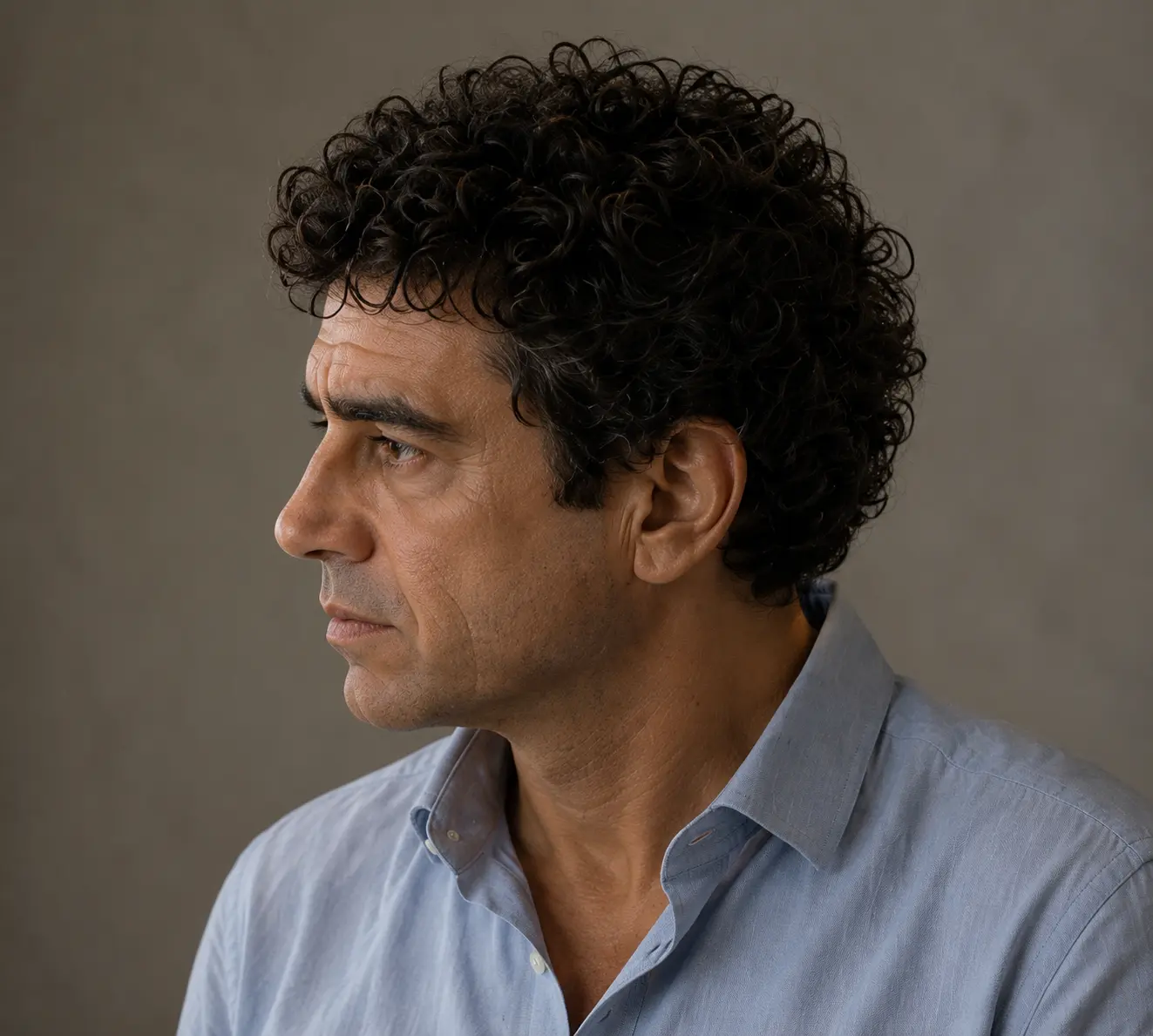
Thomas · The Son
The Right
to Remain
Thomas has learned how to arrive prepared, useful and on time. Remaining is harder, because it asks for a value that cannot be proved by competence.
His life is organised for movement. Trains, hotels, departures announced in several languages, a small wheeled case designed to pass easily between places without belonging to any of them. Thomas knows how to enter a room without disturbing its arrangement. He knows how to be ready, responsive and difficult to inconvenience. These are qualities others trust. They are also ways of leaving very little behind.
Competence is the language through which he proves his worth. If he can solve the problem, answer quickly enough, carry his own weight and require nothing in return, then his place among others feels secure. Usefulness gives him a measure he can control. Affection does not. It arrives without criteria, and Thomas has never entirely trusted what he did not have to earn.
He calls this independence, and much of it is admirable. He is dependable under pressure and attentive to obligations that many people would evade. But independence can become emotional distance with a more flattering name. Thomas has spent years resisting the failures he associates with his father, only to reproduce their shape: always responsible, often elsewhere, rarely fully present.
What he wants most is recognition without correction. To be listened to without being improved, simplified or prepared for some more acceptable future self. A brief encounter can matter deeply when it offers that kind of attention. Duration is not always the measure of intimacy. Sometimes the mark is left by the person who behaves, for one hour, as though nothing essential in you needs to be repaired.
Yet recognition creates its own danger. To admit that another person has given him something necessary is to accept an emotional debt he cannot settle through competence. Gratitude feels too close to dependency; dependency, too close to surrender. Thomas would rather carry the case, choose the departure and leave before care acquires the right to define him.
His moral change begins when honesty stops being a transaction. An apology does not have to restore a relationship in order to be owed. A letter does not have to be opened immediately in order to have been received. Silence is not always a problem demanding his intervention. These are difficult truths for a man accustomed to measuring action by result.
Remaining therefore means resisting the next useful move. It can be a meal without a conclusion, a walk that does not settle the past, a question allowed to exist after the available answers have been exhausted. Thomas learns that presence is not passivity. To stay without controlling what staying produces may require more courage than any departure.
He will continue to travel. The case will remain small, the schedule exact, the exits visible. What changes is the belief carried between them. Thomas does not have to justify every place he occupies or repay every kindness before accepting it. The right to remain is not granted by usefulness. It begins when he allows himself to believe that love need not be earned before it can be trusted.